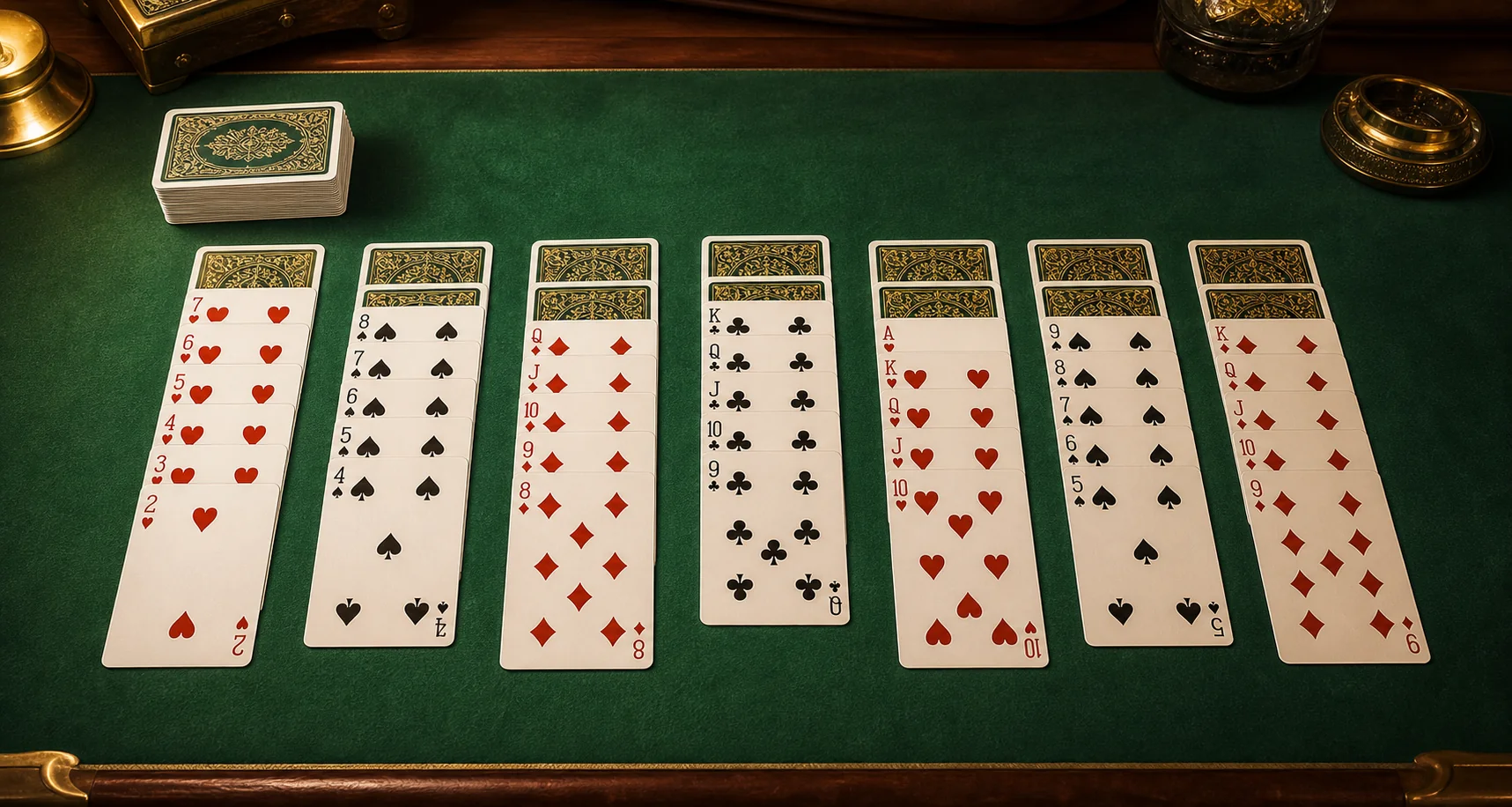
Start a Scorpion Solitaire Deal Here
The page now opens around the game instead of reading like a long article. This block is prepared for the deal, move controls, restart action, and table state when the playable module is connected.
The surrounding content stays close to the player journey: learn the core rule, try a deal, then use short guide sections when a specific situation becomes confusing.
What the table will focus on
- Seven tableau columns with standard Scorpion Solitaire movement.
- Three reserve cards for late-game pressure and recovery.
- King-only empty columns to keep the original challenge intact.
- Automatic clearing when a full King-to-Ace suit run is complete.
Why is our website the best place to play Scorpion Solitaire?
Our platform offers the ultimate Scorpion Solitaire experience, featuring flawless drag-and-drop mechanics tailored for moving large card columns. The clean, distraction-free layout includes instant undo actions and smart hints, providing the perfect lag-free environment to untangle even the toughest deals.
We combine these polished mechanics with detailed stat tracking to monitor your win rates and fastest times. With lightning-fast loading speeds and beautiful, customizable card themes, our site is the premier destination for both casual players and seasoned Scorpion masters.
What Is Scorpion Solitaire?
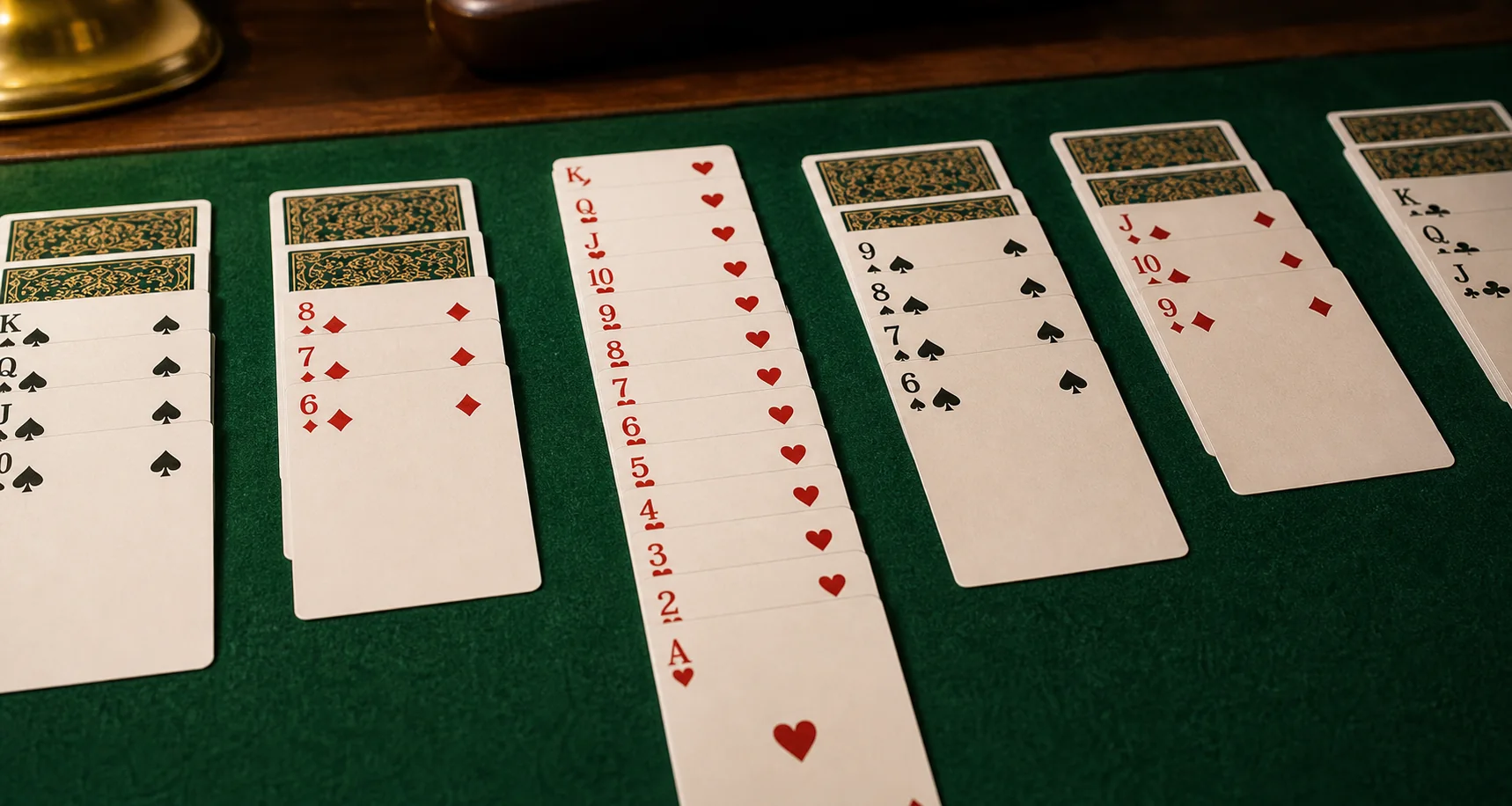
Scorpion Solitaire is a single-deck patience game related to Spider, but it plays faster and feels more compact. Seven tableau columns hold most of the deck, with three cards kept aside as a final reserve. Cards are arranged in descending order by suit, and a complete King-to-Ace run can be cleared from the table. The goal is to remove all four suit runs without trapping the cards you need under the wrong stacks.
The game is direct but not gentle. You can move a face-up card together with every card below it, even when the moving group is not perfectly ordered. That freedom creates powerful rescues and painful mistakes. A move that looks clever for one card may drag a whole tail of cards into a worse position. Good Scorpion play is the art of seeing the tail before you move the head.
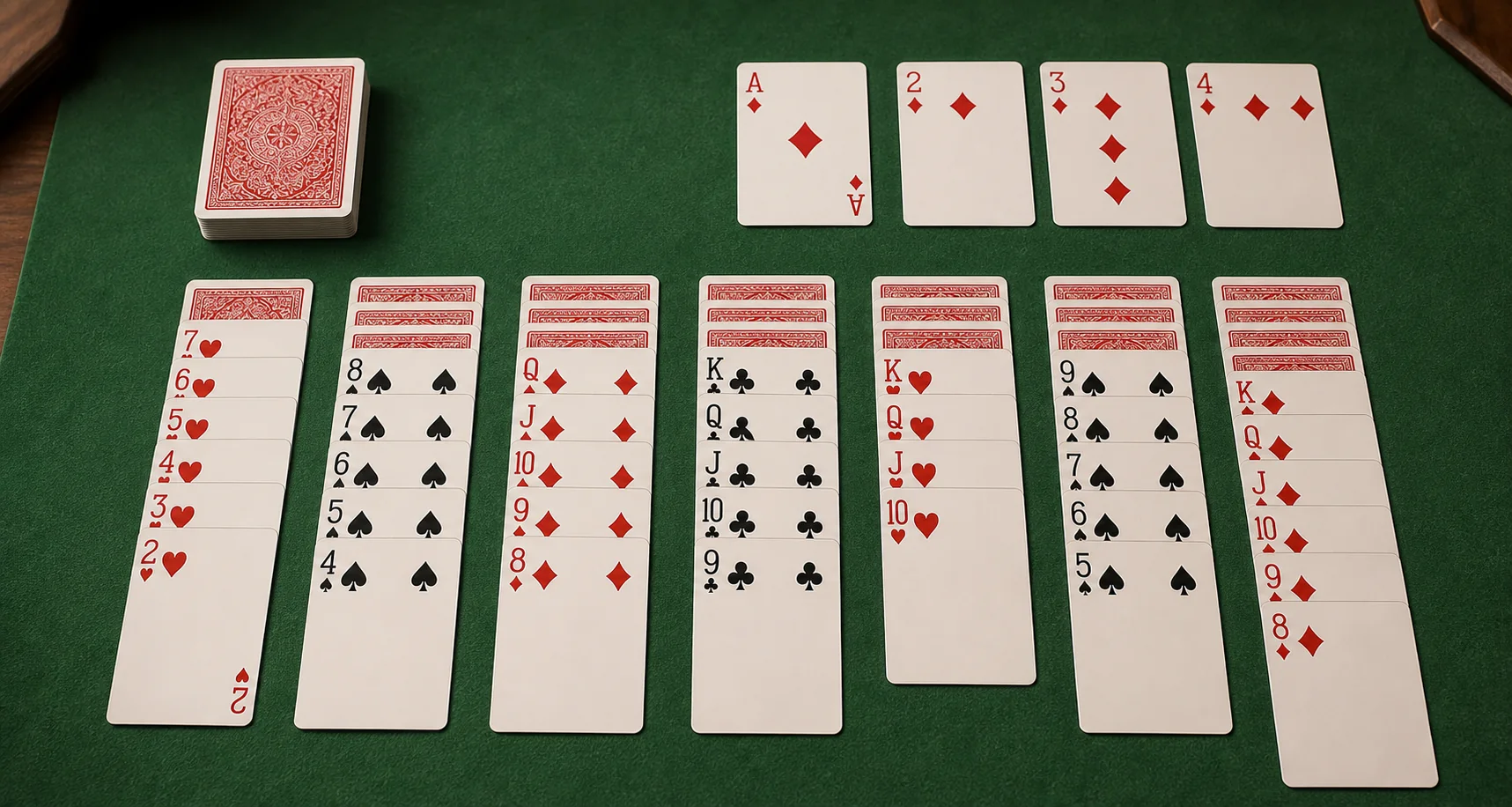
How the Game Flows
A Scorpion deal starts with columns that are already crowded. Some cards are hidden, many are visible, and the three-card reserve waits off to the side. You move cards onto the next higher card of the same suit: the 8 of Clubs goes onto the 9 of Clubs, the Queen of Hearts goes onto the King of Hearts, and so on.
When a full suited run from King down to Ace is assembled, it leaves the tableau. That clearing action is the release valve of the whole game. Each completed run gives the remaining cards more room, but reaching that point often means tolerating messy columns while you uncover the buried pieces of the suit.
If you want the deeper rule breakdown, the guide starts with setup and then moves into card movement, mistakes, and variant difficulty.
Useful Habits Before You Deal Again
- Build by suit only. A red-black sequence that would work in Klondike is useless here unless the suits match.
- Do not rush the three reserve cards. They can rescue a stalled game, but they can also cover the exact card you need.
- Protect empty columns for Kings. An open space has value only when it can start a legal column.
- Look under the moving card. The cards attached below it may change the board more than the card you are targeting.
- Free face-down cards early when the move does not damage an almost finished run.
- Keep complete suit runs clean. A nearly finished run should not become storage unless the alternative is worse.
Learn the Game Without Slowing Down
Frequently Asked Questions
Scorpion Solitaire vs Other Solitaire Games
| Game | Main idea | Difficulty | Best for |
|---|---|---|---|
| Scorpion Solitaire | Build full King-to-Ace sequences in the same suit | Medium to hard | Players who like compact, tactical tableau puzzles |
| Spider Solitaire | Arrange complete suited runs across a larger multi-deck layout | Medium to very hard | Longer sessions with deep sequence planning |
| Klondike | Build foundations from Ace to King using alternating-color tableau moves | Easy to medium | Classic draw-pile solitaire play |
| FreeCell | Use open cells to reorder cards and build suited foundations | Medium | Skill-heavy games with high visibility |
| Yukon Solitaire | Move face-up groups while building alternating-color tableau columns | Medium to hard | Players who enjoy flexible group movement |
| Pyramid Solitaire | Remove card pairs that add up to thirteen | Easy to medium | Fast arithmetic-based card clearing |